

What Is the Role of a Silverback in a Gorilla Family?
What Is the Role of a Silverback in a Gorilla Family, In the dense rainforests and misty mountain slopes of Central Africa, gorillas live in close-knit family groups led by a powerful and experienced male known as a silverback. The term “silverback” refers to an adult male gorilla whose back hair has turned silver-gray, a sign of maturity and dominance. While his imposing size and strength often capture attention, the silverback’s true importance lies in his leadership, protection, and social guidance within the group.
Gorilla families are highly organized and emotionally complex. At the center of this structure stands the silverback, whose role extends far beyond physical dominance. He is a protector, decision-maker, mediator, and caretaker. Understanding his role offers fascinating insight into the social intelligence of gorillas.
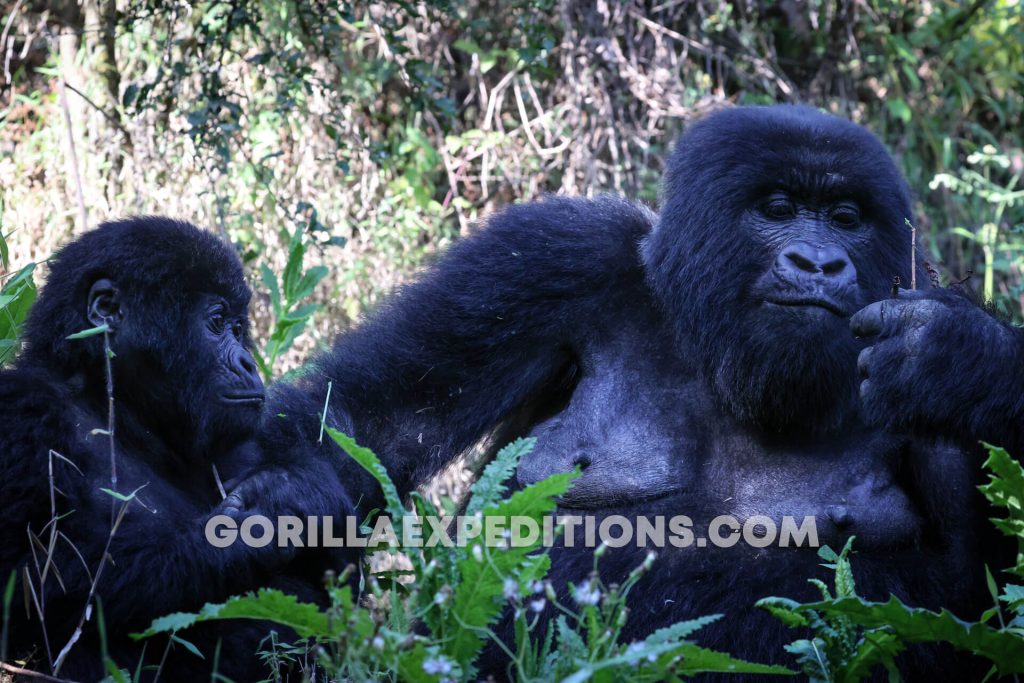
The Leader of the Group
In species such as the Mountain gorilla and the Western lowland gorilla, a typical family group—often called a troop or band consists of one dominant silverback, several adult females, and their offspring. Some groups may also include younger males who have not yet reached full maturity.
The silverback is the undisputed leader. He determines the group’s daily movements, deciding when and where they travel, feed, and rest. Gorillas are primarily herbivorous, feeding on leaves, stems, shoots, fruit, and bark. The silverback uses his experience and memory to guide the group toward safe and abundant food sources. His leadership ensures that the family conserves energy and avoids unnecessary risks.
Leadership among gorillas is not chaotic or constantly challenged. Once a silverback establishes dominance—usually through displays of strength rather than prolonged fights his authority is generally respected within the group.
Protector Against Danger
Perhaps the most dramatic and well-known role of the silverback is that of protector. Gorillas face potential threats from predators such as leopards and, in some regions, from rival male gorillas seeking to take over a group.
The silverback puts himself between his family and the threat when danger is imminent. He may perform an intimidating display that includes chest beating, loud vocalizations, charging, and breaking vegetation. These displays are often enough to scare off predators or rival males without actual physical confrontation.
Despite their fearsome reputation, gorillas are generally peaceful animals. A silverback prefers to resolve conflicts through display and warning rather than fighting. However, if a physical confrontation becomes unavoidable, he will defend his group with immense strength and courage.
This protective role is critical to the survival of the family. Without a strong and capable silverback, the group becomes vulnerable to attacks and instability.


The Decision-Maker
Every day in a gorilla family involves a series of decisions: when to move, how far to travel, where to build night nests, and how to respond to changes in the environment. The silverback is responsible for making these choices.
Gorillas build fresh nests each evening, usually on the ground or in low vegetation. The silverback often selects a safe nesting site that offers protection and access to food the following day. His experience allows him to assess risks such as exposure to predators or unfavorable weather.
These decisions are rarely arbitrary. They are based on memory, environmental awareness, and social understanding. The silverback’s role as decision-maker contributes to the group’s overall stability and cohesion.
A Social Anchor
Beyond physical protection and leadership, the silverback serves as the emotional and social anchor of the group. Gorilla families are bonded through grooming, play, and close physical contact. The silverback participates in these interactions, reinforcing social ties.
Young gorillas often seek reassurance by sitting near or touching the silverback. Infants may climb on him or play in his presence. His calm demeanor can soothe tension within the group.
When disputes arise—perhaps between juveniles or among females—the silverback may intervene. His presence alone can defuse conflicts. In this way, he acts as a mediator, maintaining harmony within the family.
Interestingly, silverbacks are known to show gentle behavior, especially toward infants. While they may not be the primary caregivers (that role belongs to the mothers), they often tolerate and even encourage playful interaction with young members.


The Reproductive Role
Another essential function of the silverback is reproduction. In most gorilla groups, the dominant silverback fathers the majority, if not all, of the offspring. This ensures a clear social structure and reduces competition among males within the group.
Females typically choose to stay with a strong and stable silverback because his protection increases the chances that their offspring will survive. In some cases, females may transfer to another group if they perceive a different silverback to be more capable.
The silverback’s reproductive success depends not only on physical strength but also on his ability to maintain group cohesion and safety. A stable group under strong leadership creates an environment where infants can thrive.
Guiding Young Males
As young male gorillas mature, they begin developing the physical traits that will eventually mark them as silverbacks. These males, often called blackbacks before reaching full maturity, may remain in the group for some time.
The dominant silverback plays a subtle but important role in shaping their development. Through observation and occasional correction, younger males learn appropriate social behavior. Eventually, most will leave to form their own groups or live temporarily as solitary males before attracting females.
This transition is a natural part of gorilla life and ensures genetic diversity across populations.
Stability and Group Survival
The presence of a capable silverback directly influences the survival and longevity of a gorilla family. Studies of gorilla populations have shown that groups led by experienced silverbacks tend to be more stable, with lower rates of infant mortality.
If a silverback dies or is displaced, the group may fragment. Females might transfer to other groups, and young males may leave prematurely. In some cases, rival males that take over a group may harm unweaned infants, a tragic but documented behavior in primate social systems.
Because of this, the silverback’s strength and leadership are not just symbolic—they are vital to the continuity of the family line.
Intelligence and Emotional Depth
Modern research has revealed that gorillas possess remarkable intelligence and emotional awareness. The silverback’s role reflects these traits. His leadership requires memory, strategic thinking, and social sensitivity.
He must balance assertiveness with calm authority. Too much aggression can destabilize the group, while too little control may invite challenges from rivals. Successful silverbacks maintain order through confidence rather than constant force.
Observers in the wild often note how a silverback watches over his group quietly, scanning the environment while others feed or rest. This vigilant yet composed presence underscores his central role.
Conclusion
The silverback is far more than the largest member of a gorilla family. He is the cornerstone of the group’s structure, safety, and emotional well-being. As leader, protector, decision-maker, and social guide, he ensures that the family functions as a cohesive and resilient unit.
In species like the Mountain gorilla and the Western lowland gorilla, the silverback’s presence defines the stability of the group. His strength deters danger, his wisdom guides daily life, and his calm authority maintains harmony.
Through his leadership, the gorilla family thrives in some of the world’s most challenging environments. The silverback stands not only as a symbol of power but also as an example of responsibility and social intelligence in the animal kingdom.