

Can I see the Big Five in Akagera National Park.
Can I see the Big Five in Akagera National Park.: Yes, and it’s one of the few places in East Africa where all five iconic species roam wild within a single protected area. Located in eastern Rwanda, Akagera blends wetlands, grasslands, woodland and lakes, creating a rich habitat where lions, elephants, buffaloes, leopards and rhinoceros live and are increasingly being seen by visitors on guided game drives and safaris.
Below is an in-depth article explaining the Big Five, their biology, behavior’s, and why Akagera is an excellent destination to see them.
Safari in Akagera National Park: A Complete Big Five Experience
Akagera National Park stretches across more than 1,122 square kilometres in eastern Rwanda. Over recent years the park has undergone a remarkable revival from the brink of wildlife collapse due to decades of poaching and habitat loss. Through strong conservation action, Akagera now supports thriving populations of all five of Africa’s most iconic big mammals “the Big Five” making it a premier safari destination for wildlife lovers.
The Big Five – lion, elephant, buffalo, leopard, and rhinoceros earned their name during the colonial era because they were the five most dangerous animals to hunt on foot. Today, they remain flagship species for conservation and tourism.
African Lion (Panthera leo)
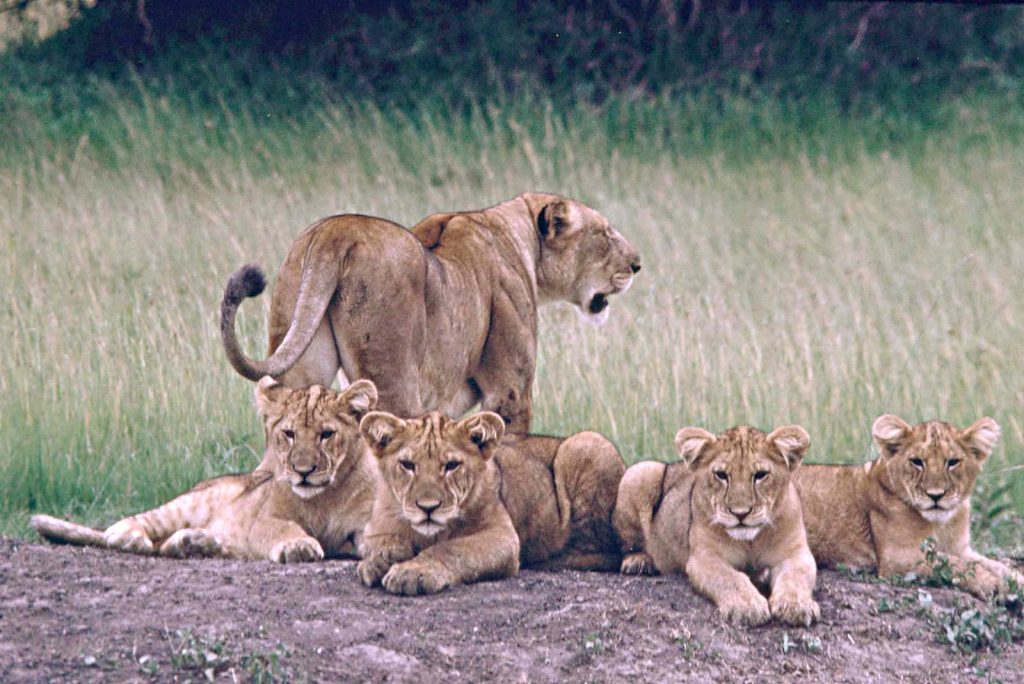
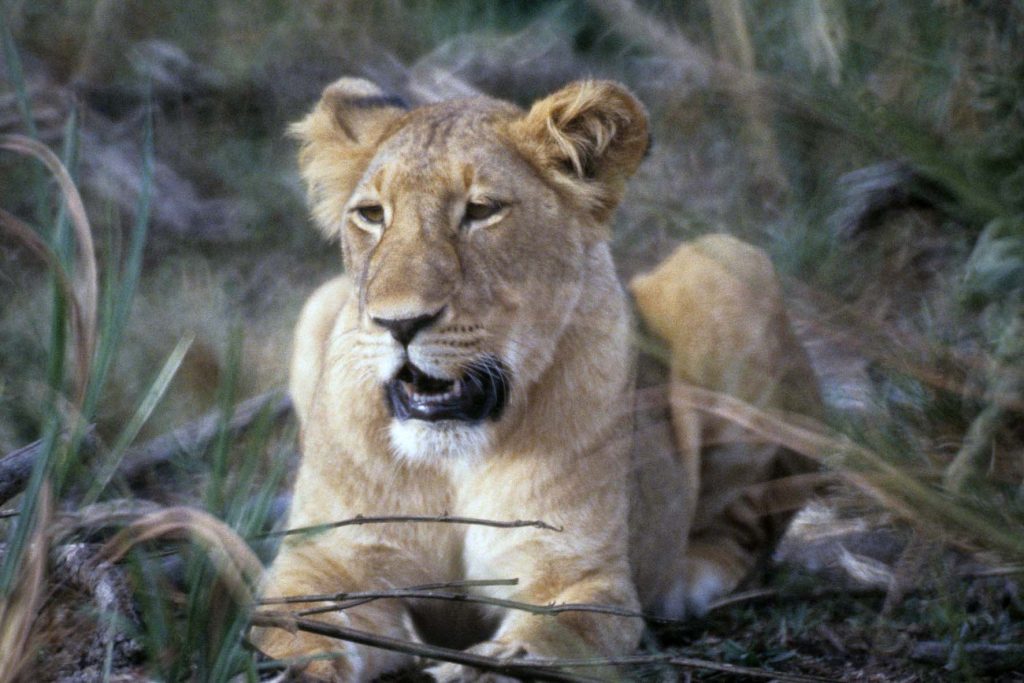
Lions are perhaps the most famous of Africa’s big mammals. Known as the “king of beasts,” they are charismatic predators that live in social groups called prides consisting of related females, their cubs, and a coalition of males. Lionesses do most of the hunting, using coordinated strategies to take down large prey such as wildebeest, zebra and buffalo.
Family & Social Structure
Family: Felidae
Group: Pride (related females + males)
Females stay with the pride throughout life, while males may disperse.
Reproduction & Gestation
Females reach sexual maturity at around four years.
They mate year-round, and gestation lasts around 110 days.
Litters generally contain one to four cubs, born in a secluded den.
Lion cubs are born blind and vulnerable. Mothers hide them for protection early on and later introduce them to the pride when they are strong enough to follow and interact.
In Akagera, lions were extinct by the early 2000s due to heavy poaching but were reintroduced in 2015. Since then their numbers have increased, and sightings on safari have become more common, especially in the park’s northern plains.
African Elephant (Loxodonta africana)
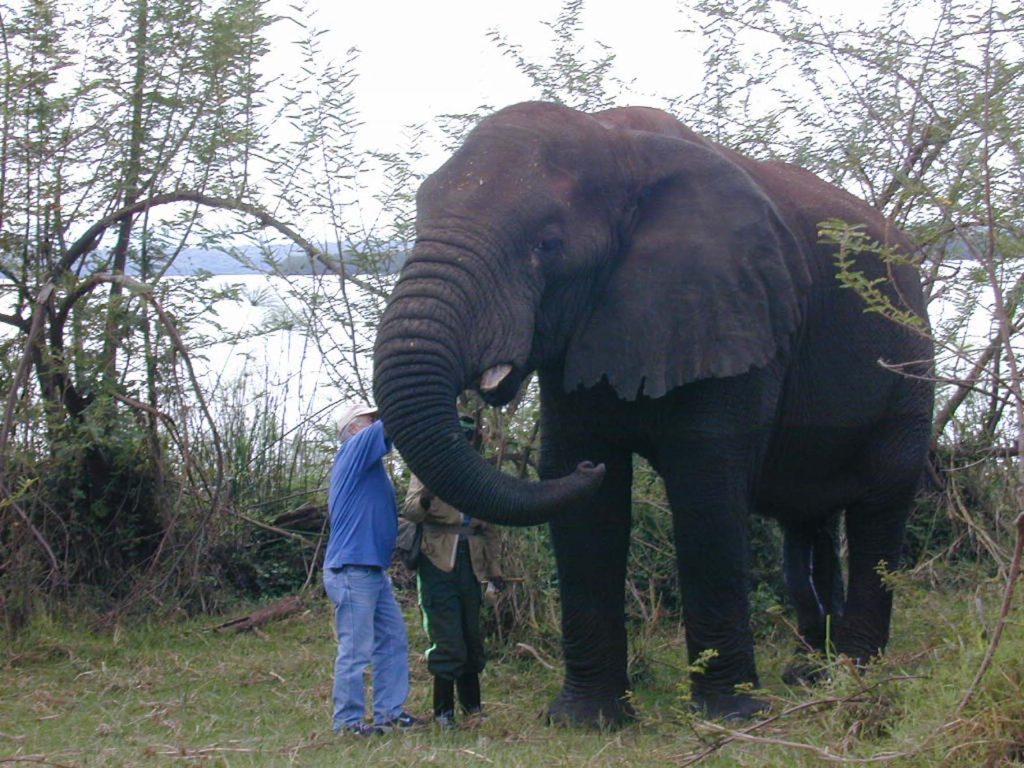
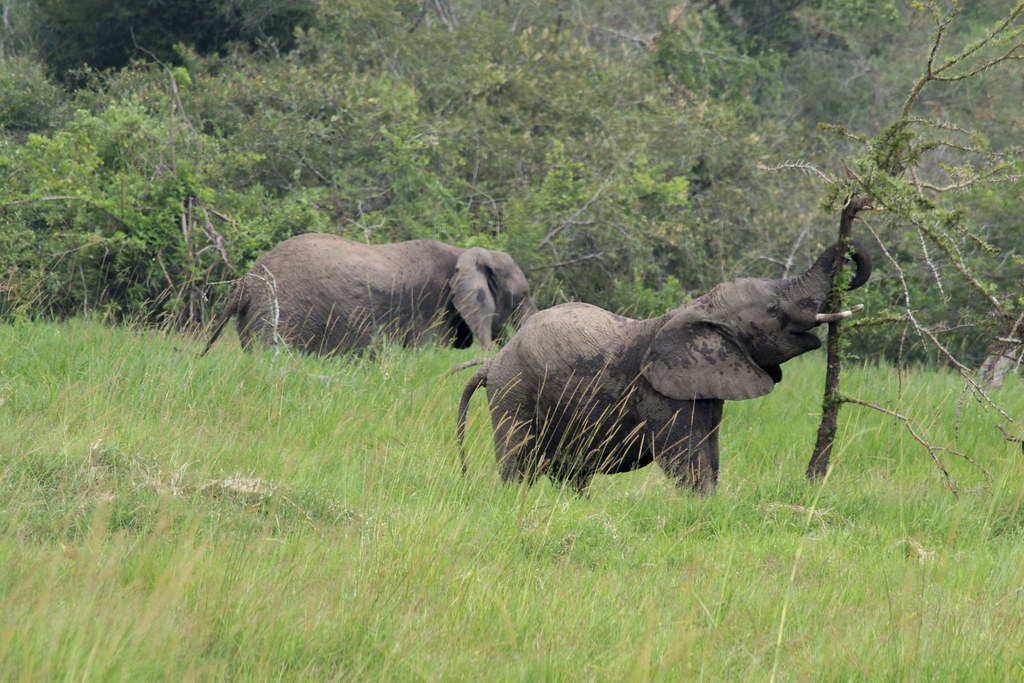
Elephants are the largest land mammals on Earth and an unforgettable sight on any safari. They are highly intelligent and social animals that live in extended family herds led by a matriarch usually the oldest and most experienced female.
Family & Social Structure
Family: Elephantidae
Herds consist of related females and their young. Adult males often lead solitary lives or join loose bachelor groups.
Reproduction & Gestation
Elephants have the longest gestation period of any land mammal: roughly 22 months.
Calves are born nearly a meter tall and weigh around 120 kg, ready to stand and keep up with the herd soon after birth.
Elephants play a pivotal ecological role by shaping habitats, dispersing seeds and creating water access for other wildlife. Akagera’s elephants were reintroduced after major population losses decades ago and now number over 100 individuals, often spotted near water bodies such as Lake Ihema.
African Buffalo (Syncerus caffer)
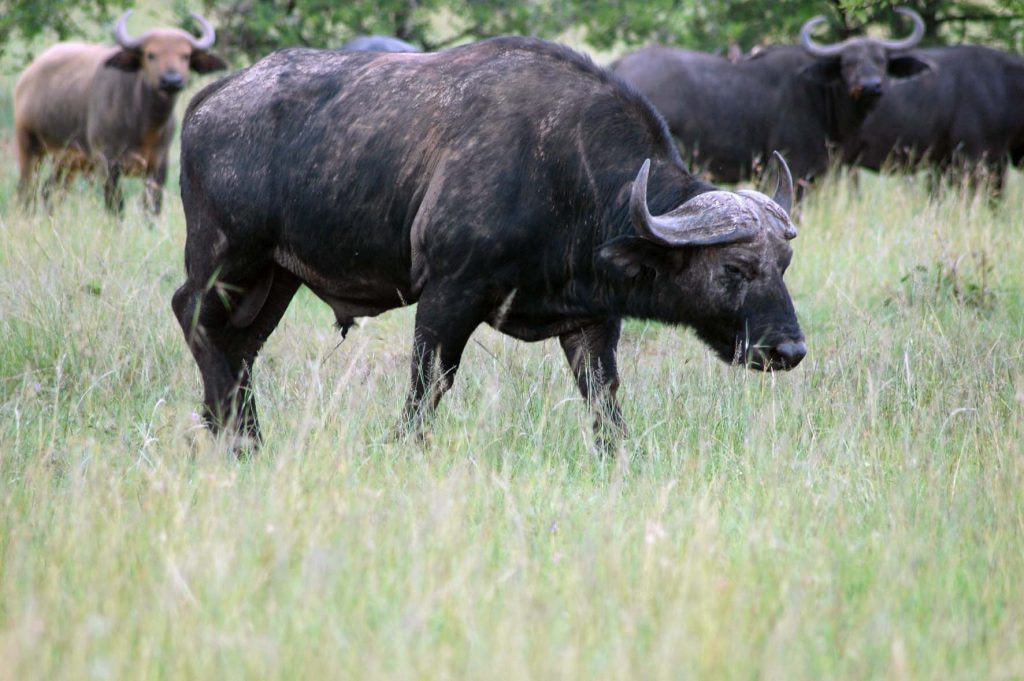
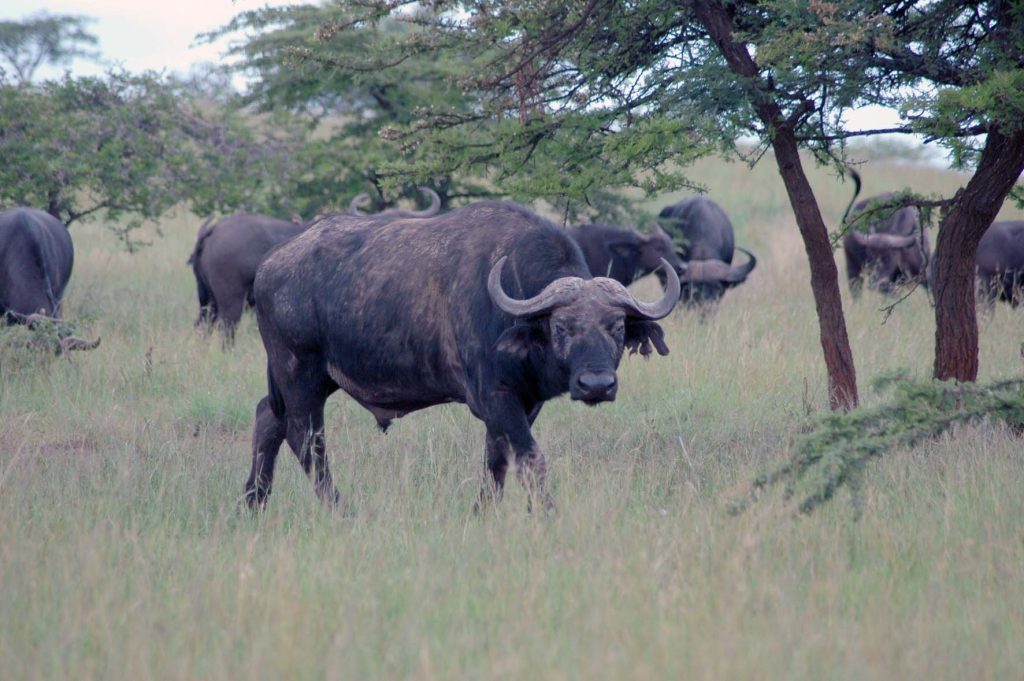
Often simply called the Cape buffalo, this robust bovine is easily recognized by its massive body, strong horns and wide herd formations. Buffaloes are grazers and depend on grasses for bulk feeding across the savannah.
Family & Social Structure
Family: Bovidae
Highly social, buffaloes form large herds that can reach hundreds of individuals.
Reproduction & Gestation
Females typically give birth after a gestation of about 11.5 months.
Calves stay hidden for a short period before joining the main herd for safety.
Buffalo herds are among the easiest of the Big Five to encounter in Akagera. With estimates of around 4,000 individuals, they form a prominent part of wildlife sightings in the park’s grassy plains.
4. Leopard (Panthera pardus)
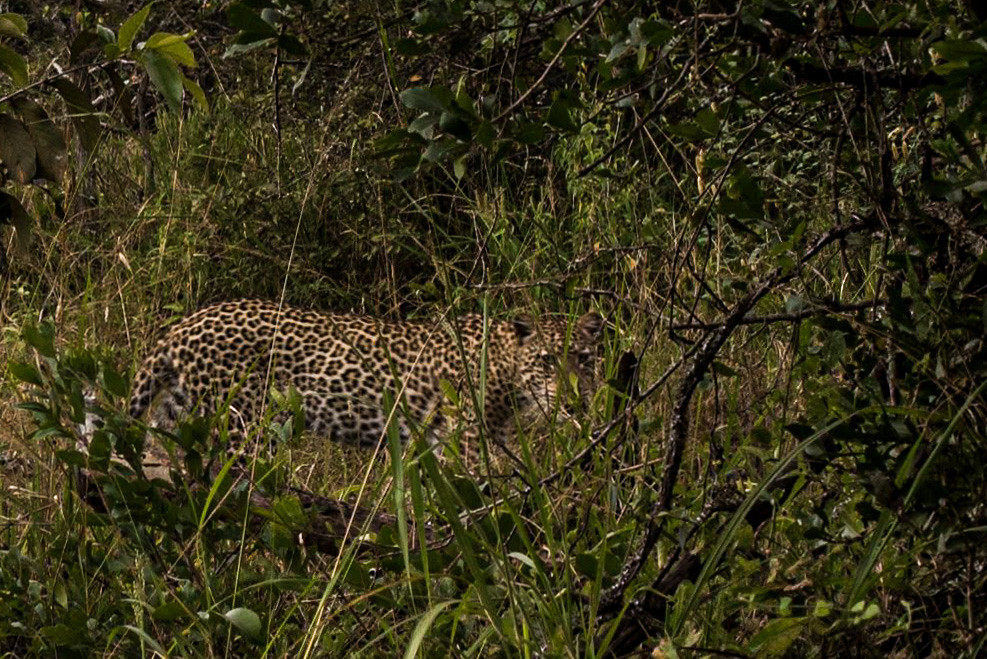
Leopards are incredibly powerful and adaptable big cats, known for their stealth and ability to thrive in various habitats. They are largely solitary and most active at night, making them the most elusive of the Big Five.
Family & Behaviour
Family: Felidae
Leopards maintain territories and largely hunt alone. They drag prey up trees to avoid competition with other predators.
Reproduction & Gestation
Females enter heat year-round, and gestation lasts 90–105 days.
Litters typically contain 2–4 cubs. Cubs stay with the mother up to two years as they learn to hunt.
Due to their shy nature and camouflage coat, leopards are the hardest of the Big Five to spot in Akagera. Night game drives and patience greatly improve the chances of seeing one.
Rhinoceros (Black & White)
Rhinoceros are majestic and prehistoric-looking mammals with thick skin and one or two horns. Akagera now hosts both black rhinos and white rhinos after successful conservation and reintroduction efforts.
Family & Behavior
Family: Rhinocerotidae
Black rhinos are browsers, favoring wooded areas. White rhinos are grazers, found on open grasslands.
Reproduction & Gestation
Rhinos have a long gestation period of about 15–16 months.
Females give birth to a single calf, which stays close to its mother for up to three years.
Rhinos were absent from Akagera for about a decade until black rhinos were reintroduced in 2017, followed by white rhinos in 2021. Since then calves have been born in the wild, demonstrating successful adaptation and growth.
Safari Experience in Akagera
Game drives in Akagera are offered both in the morning and afternoon, with opportunities for night drives that increase the chances of seeing nocturnal predators like leopard and lion at dusk. Boat safaris on lakes such as Lake Ihema provide another perspective for viewing hippos, crocodiles and wildlife gathering at water’s edge.
While wildlife sightings can never be guaranteed animals move freely and unpredictably, the combination of dedicated guides, a relatively compact park, and robust populations means visitors often encounter all five of the Big Five during a well-planned safari.
In Conclusion
Akagera National Park stands out among African safari destinations, not only for its dramatic comeback story, but for offering visitors the rare opportunity to see the full Big Five in a single, beautifully preserved ecosystem. With strong conservation efforts and community support behind it, Akagera continues to grow both its wildlife populations and its reputation as a must-visit safari location for anyone seeking an authentic African wildlife adventure.