

Nyungwe National Park: Rwanda’s Ancient Rainforest Treasure
Nyungwe National Park stands as one of Africa’s most remarkable natural landscapes. Located in southwestern Rwanda, this vast rainforest covers rolling mountains, deep valleys, and rich biodiversity that attracts travelers, researchers, and conservationists from around the world. Nyungwe offers more than scenic beauty; it protects ancient ecosystems, rare wildlife, and vital water sources for the region. As one of the oldest rainforests on the continent, Nyungwe tells a powerful story about nature, resilience, and conservation.
Location and Geographic Importance
Nyungwe National Park lies along Rwanda’s border with Burundi, stretching across several districts including Rusizi and Nyamasheke. The park covers over 1,019 square kilometers, making it the largest protected forest in Rwanda. Its high elevation, which ranges from about 1,600 to over 2,900 meters above sea level, creates a cool and misty climate throughout the year.
The forest plays a crucial role in regional water systems. Nyungwe feeds both the Nile and Congo river basins, which makes it one of the most important water catchment areas in East and Central Africa. Rivers, wetlands, and waterfalls flow through the park, supporting wildlife and nearby communities.
An Ancient Rainforest with Deep History
Nyungwe ranks among the oldest rainforests in Africa. Scientists estimate that the forest survived the last Ice Age, which allowed plants and animals to evolve over millions of years. This long history explains the park’s exceptional biodiversity and high number of endemic species.
For centuries, local communities depended on the forest for traditional medicine, cultural practices, and natural resources. Over time, Rwanda recognized Nyungwe’s ecological value and declared it a national park in 2004. Since then, conservation efforts have strengthened protection while promoting responsible tourism.
Rich Biodiversity and Wildlife
Nyungwe National Park hosts an extraordinary variety of life. The park shelters over 1,000 plant species, many of which grow nowhere else in the region. Towering mahogany trees, giant ferns, orchids, and colorful flowers dominate the forest canopy and understory.
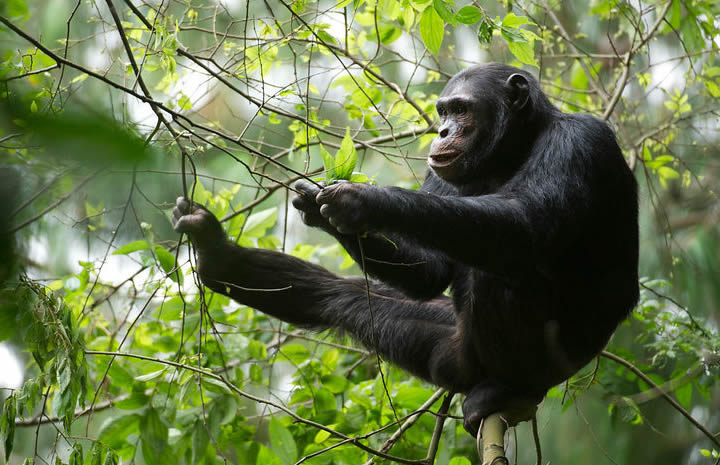
Wildlife thrives throughout the park. Nyungwe protects 13 species of primates, which makes it the top primate destination in Rwanda. Chimpanzees remain the most famous residents, and visitors travel from across the globe to track them in their natural habitat. Colobus monkeys, especially the striking Ruwenzori colobus, move in large troops and create unforgettable wildlife encounters.
The park also supports forest elephants, serval cats, golden cats, and many smaller mammals. Bird lovers consider Nyungwe a paradise. More than 320 bird species live here, including over 30 Albertine Rift endemics. Colorful turacos, sunbirds, and rare forest birds attract serious birdwatchers year-round.

Chimpanzee Trekking Experience
Chimpanzee trekking stands as one of Nyungwe’s most popular activities. Visitors join experienced guides early in the morning and hike through dense forest trails while listening for calls and movement. The trek can feel challenging, but the reward feels unmatched.
Watching chimpanzees interact, groom, and communicate offers a powerful connection to nature. Rwanda manages trekking carefully to protect both visitors and wildlife. Small group sizes, time limits, and trained guides ensure a respectful and sustainable experience.
The Iconic Canopy Walkway
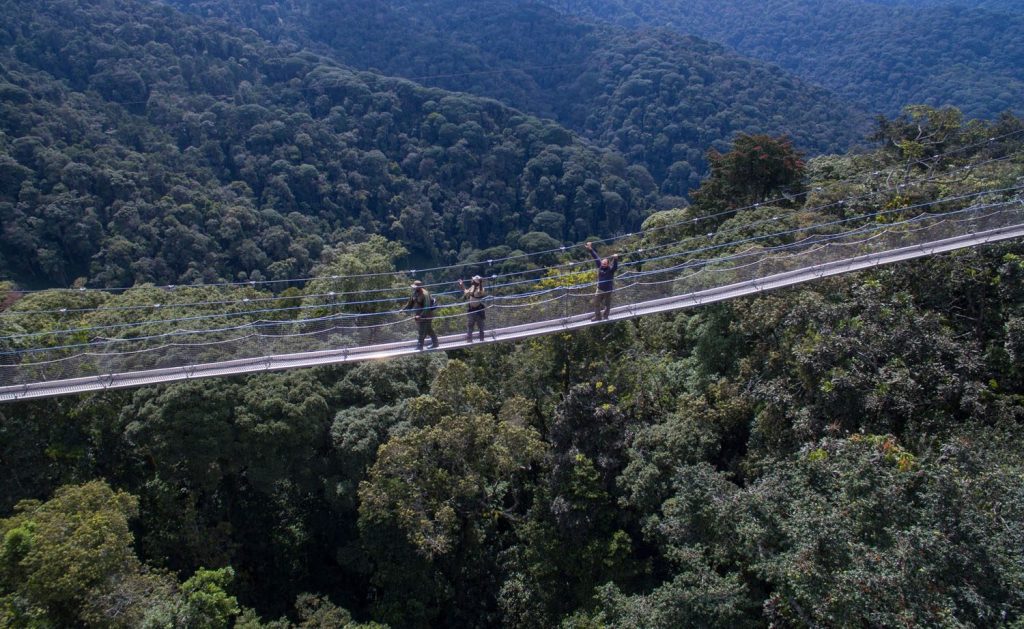
Nyungwe National Park features one of Africa’s most thrilling attractions: the canopy walkway. Suspended about 60 meters above the forest floor, this walkway stretches over 200 meters and offers breathtaking views of the rainforest canopy.
From this height, visitors spot birds, monkeys, and towering trees from a completely new perspective. The walkway provides an exciting yet safe adventure and has become a symbol of Nyungwe tourism. Photographers especially love this experience due to the dramatic scenery and changing light.
Rope Course

The rope course activity in Nyungwe National Park offers an exciting way to experience the rainforest from above the ground. Set among tall trees and natural forest features, the course challenges participants to move across suspended ropes, wooden platforms, and balance elements while staying securely harnessed. This activity builds confidence, coordination, and teamwork as visitors navigate each section step by step. Surrounded by fresh air and forest sounds, the rope course combines adventure with nature, making it a fun and memorable experience for visitors who want more than a traditional forest walk.
Hiking Trails and Outdoor Activities
Nyungwe offers a wide network of well-maintained hiking trails that suit different fitness levels. Trails lead to waterfalls, viewpoints, and hidden forest sections. Popular routes include the Igishigishigi Trail, the Kamiranzovu Marsh Trail, and the Bigugu Trail, which leads to the highest peak in the park.
Each trail reveals different landscapes, from bamboo forests to open swamps. Guided walks help visitors learn about medicinal plants, animal tracks, and forest ecology. Nature lovers enjoy the peaceful atmosphere and fresh mountain air.
Conservation and Community Involvement
Nyungwe National Park plays a major role in Rwanda’s conservation success. Park management focuses on protecting biodiversity while supporting nearby communities. Tourism revenue funds education, healthcare, and infrastructure projects in surrounding villages.
Local people work as guides, rangers, porters, and hospitality staff. This approach creates jobs and encourages communities to protect wildlife instead of exploiting forest resources. Conservation education programs also teach younger generations about environmental responsibility.

Best Time to Visit Nyungwe National Park
Nyungwe welcomes visitors throughout the year, but dry seasons offer the best conditions for trekking and hiking. The main dry periods run from June to September and from December to February. Trails remain easier to navigate during these months.
Rain falls frequently due to the forest climate, even during dry seasons. Visitors should pack waterproof clothing and sturdy hiking shoes. The rain also keeps the forest lush and vibrant, which enhances the overall experience.
Why Nyungwe Matters to Rwanda and the World
Nyungwe National Park represents more than a tourist destination. It serves as a living laboratory for scientists, a refuge for endangered species, and a symbol of Rwanda’s commitment to environmental protection. The forest helps regulate climate, store carbon, and protect water resources that millions of people rely on.
For travelers, Nyungwe offers authenticity, adventure, and deep connection with nature. Unlike crowded destinations, the park delivers quiet beauty and meaningful experiences. Anyone who walks beneath its towering trees feels the power of an ancient ecosystem that continues to shape the land and its people.
Conclusion
Nyungwe National Park stands as one of Rwanda’s greatest natural assets. Its ancient rainforest, rich wildlife, and strong conservation efforts make it a global treasure. From chimpanzee trekking to canopy walks, the park offers unforgettable experiences while preserving fragile ecosystems. Nyungwe proves that nature and people can thrive together when protection, respect, and sustainability lead the way.