

How Gorillas Survive in the Forest
How Gorillas Survive in the Forest, Gorillas are among the most fascinating primates on Earth because they have developed remarkable ways of surviving in some of the most challenging forest environments in Africa. These powerful yet gentle animals live in dense tropical forests where they must find food, build shelter, cope with heavy rainfall and cold temperatures, and maintain strong social bonds within their families. The two gorilla species found in Africa include the Mountain Gorilla and the Western Gorilla, both of which depend heavily on forest ecosystems for survival. In regions such as Bwindi Impenetrable National Park and Volcanoes National Park, gorillas have adapted to mountain climates, thick vegetation, and complex social structures that allow them to thrive despite natural challenges.
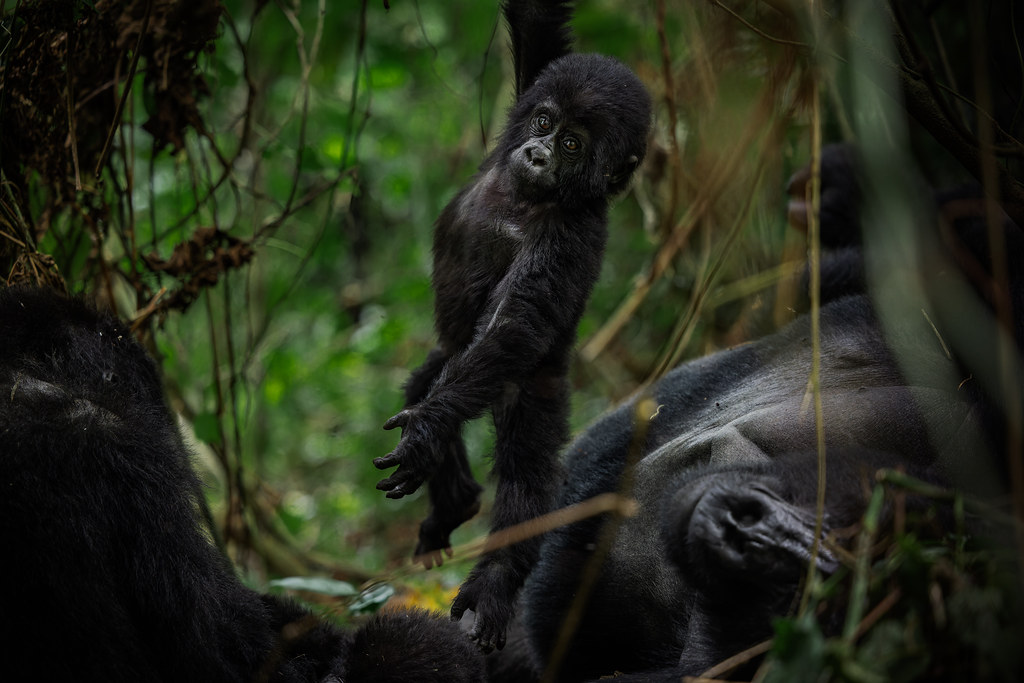
The Forest Environment Where Gorillas Live
Gorillas live in tropical and montane forests that provide a rich supply of vegetation and shelter. These forests are filled with tall trees, vines, shrubs, and dense undergrowth that offer both food and protection from predators or environmental hazards. In high-altitude areas where the Mountain Gorilla lives, the climate can be cold, misty, and rainy for much of the year, which means that gorillas must constantly adapt to changing weather conditions.
The forest environment also provides natural pathways that gorillas use while moving through their territory. Instead of randomly wandering, gorilla groups often follow familiar routes where food plants grow abundantly, which allows them to conserve energy while searching for nourishment.
How Gorillas Find and Eat Food
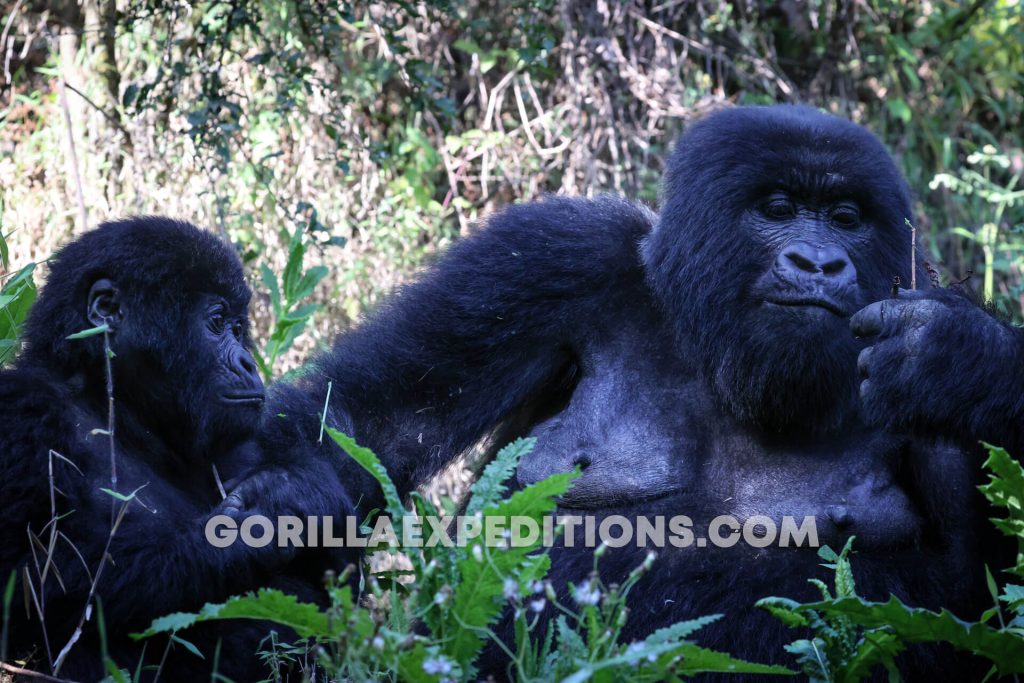
One of the most important aspects of gorilla survival in the forest is their feeding behavior. Gorillas are primarily herbivores, meaning that they depend mostly on plant material for their diet. Their daily meals include leaves, stems, bamboo shoots, fruits, roots, flowers, and occasionally insects such as ants or termites.
An adult gorilla spends many hours each day feeding because the plant-based diet they rely on requires large quantities of vegetation to provide enough nutrients and energy. Their powerful jaws and large teeth allow them to chew tough plant fibers that many other animals cannot digest easily.
Different gorilla species eat slightly different foods depending on their habitat. The Mountain Gorilla, for example, often feeds on leaves, stems, and bamboo shoots because fruit is less abundant in high-altitude forests. In contrast, gorillas living in lowland forests consume more fruit when it is available.
Gorillas usually feed together as a group while slowly moving through the forest. This coordinated feeding behavior ensures that younger gorillas learn which plants are safe to eat and where food can be found.
How Gorillas Build Nests for Sleeping
Every evening, gorillas build nests where they sleep during the night. These nests are constructed from leaves, branches, and other vegetation that they gather from the surrounding forest. The process of nest building is quick but highly effective because gorillas weave plant material together to create a comfortable and insulated resting place.
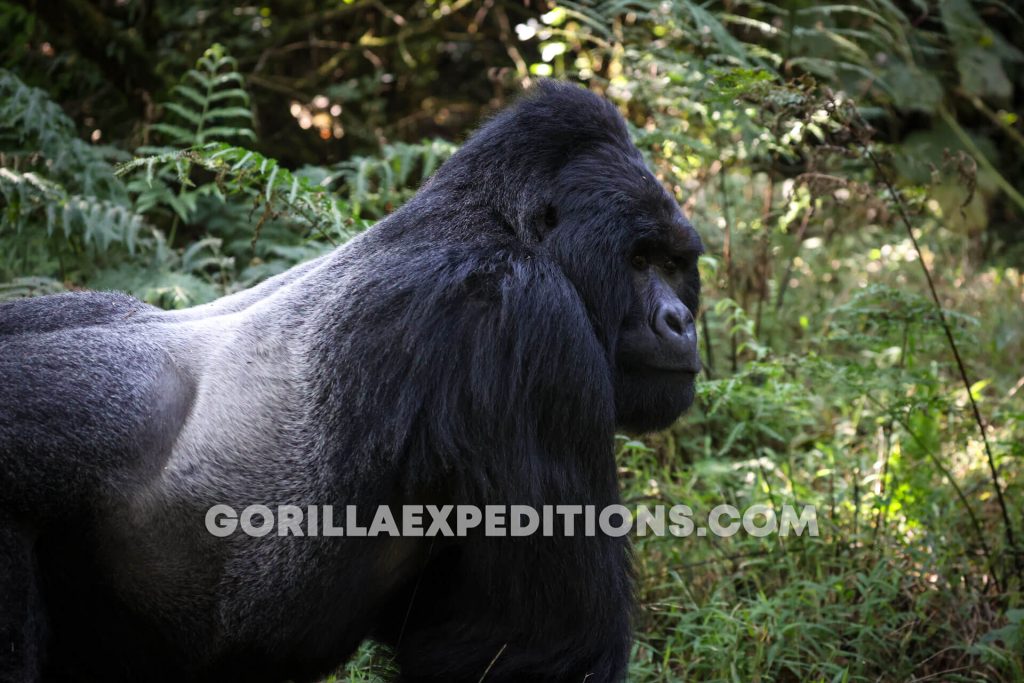
Adult gorillas usually build their nests on the ground, especially the large males known as silverbacks. Younger gorillas or smaller individuals sometimes build nests in trees where they feel safer from potential threats.
Nest building serves several important purposes. It helps gorillas stay warm during cold nights, protects them from damp ground conditions, and provides a safe place to rest after a long day of feeding and traveling.
How Gorillas Cope with Cold Weather and Rain
In the mountainous forests where many gorillas live, heavy rainfall and cold temperatures are common. The Mountain Gorilla has developed several adaptations that help it survive in these harsh conditions.
One of the most important adaptations is their thick fur, which provides insulation against cold weather and helps protect their skin from constant rain. This dense hair allows them to remain comfortable even in misty environments where temperatures can drop significantly.
Gorillas also reduce their exposure to rain by resting under dense vegetation or large trees that provide natural shelter. When rain becomes very heavy, they often remain relatively inactive and conserve energy while waiting for the weather to improve.
Their nests also play a crucial role in staying warm because the layers of leaves and branches act as insulation that protects them from cold ground and moisture.


Social Structure and Group Living
Another key factor in gorilla survival is their strong social structure. Gorillas live in family groups that are typically led by a dominant adult male known as a silverback. The silverback is responsible for guiding the group, protecting members from threats, and making decisions about where the group should travel or feed.
A typical gorilla group may include several adult females, their offspring, and sometimes younger males. Living in a group provides many advantages because members can protect one another, share knowledge about food sources, and cooperate in raising young gorillas.
The presence of a strong silverback is particularly important because he defends the group from rival males and other potential dangers. His leadership helps maintain stability and safety within the troop.
Communication Among Gorillas
Gorillas communicate with each other using a combination of sounds, body language, facial expressions, and physical gestures. These forms of communication help maintain order within the group and allow individuals to express emotions such as excitement, warning, or affection.
For example, chest beating is a famous behavior performed mostly by adult males. This dramatic display produces a loud sound that can travel long distances through the forest and is often used to demonstrate strength or warn rivals to stay away.
Soft vocalizations and grooming behaviors are also common forms of communication that help strengthen social bonds between individuals.
What Happens When a Gorilla Dies?
The death of a gorilla within a group can have a profound impact on the rest of the troop because these animals form strong social and emotional bonds with one another. When a member of the group dies, other gorillas often show unusual behavior that suggests awareness of the loss.
In some cases, group members may remain near the body for a period of time while quietly observing or touching the deceased individual. Mothers who lose infants have sometimes been observed carrying the body for several days, which indicates the depth of their attachment.
The death of a dominant silverback can be especially significant because it may lead to changes in group leadership or cause some members to leave the group and join another troop.
Challenges Gorillas Face in the Wild
Although gorillas are powerful animals, they still face many threats in the wild. Habitat loss caused by deforestation and human expansion reduces the amount of forest available for them to live and feed in. Diseases can also spread between humans and gorillas because they share many genetic similarities.
Conservation efforts in places like Bwindi Impenetrable National Park and Volcanoes National Park focus on protecting gorilla habitats, monitoring their populations, and ensuring that tourism activities do not harm these sensitive animals.
Conclusion
Gorillas have developed extraordinary strategies that allow them to survive in dense forests where weather conditions, food availability, and social challenges constantly shape their daily lives. Through careful feeding habits, nest building, strong family bonds, and effective communication, species such as the Mountain Gorilla have adapted to environments that can be both beautiful and demanding.
Their ability to endure cold rain, construct shelters, cooperate within family groups, and respond emotionally to the loss of members shows that gorillas are not only physically powerful but also socially complex animals. Protecting their forest habitats ensures that these incredible primates will continue to survive and thrive in the wild for generations to come.