

Gorilla Families of Virunga: A Deep Exploration of Social Life, Leadership, and Survival
Gorilla Families of Virunga: A Deep Exploration of Social Life, Leadership, and Survival, Hidden within the lush, mist-covered slopes of Virunga National Park lies one of the most remarkable and emotionally complex animal societies in the natural world, where mountain gorillas live not as isolated individuals but as deeply interconnected families whose daily lives reveal intelligence, cooperation, and resilience that closely mirror human social systems in surprising and meaningful ways. These gorillas, classified scientifically as part of the subspecies Mountain Gorilla, inhabit a fragile ecosystem that has become both a sanctuary and a battleground for survival, making their family structures not only fascinating to study but also essential to protect.

The Foundation of Gorilla Society: Family Structure and Organization
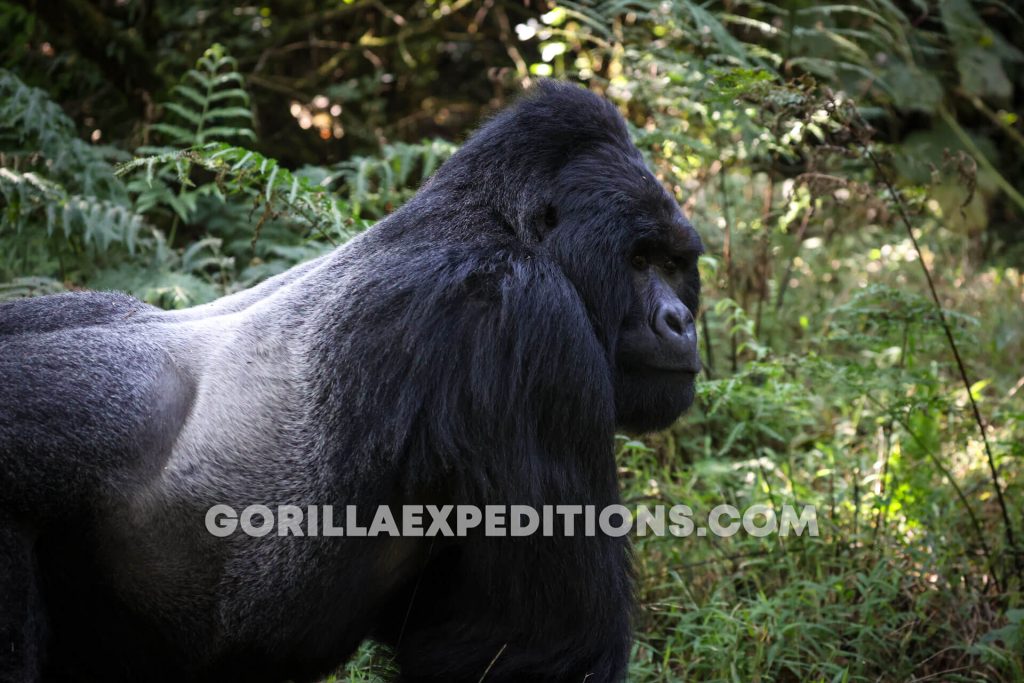
At the heart of every gorilla family is a powerful and experienced leader known as the silverback, a mature male distinguished by the striking patch of silver hair that stretches across his back and signals both his age and authority, and whose presence defines the stability, direction, and safety of the entire group in ways that go far beyond simple dominance. A typical gorilla family is composed of this dominant silverback, several adult females, their offspring of various ages, and sometimes one or more subordinate males who may either support the leader or quietly prepare for future leadership opportunities.
What makes these families particularly compelling is the way authority is balanced with responsibility, because the silverback does not merely command but also protects, nurtures, and mediates, ensuring that disputes are minimized and that vulnerable members such as infants remain safe from both internal tensions and external threats. In larger families, the presence of additional males introduces a subtle but constant undercurrent of competition, which can either strengthen the group through cooperation or gradually lead to division when ambitions begin to clash.
Daily Life: A Rhythm of Feeding, Movement, and Social Connection
The daily routine of a gorilla family unfolds with a steady rhythm that revolves around survival needs while still allowing for rich social interaction, as the group spends hours moving through dense vegetation in search of food sources that include leaves, stems, shoots, and occasional fruits, all of which must be consumed in large quantities to sustain their massive bodies. The silverback plays a crucial role in guiding these movements, using his knowledge of the terrain to lead the family toward reliable feeding grounds while avoiding danger.
Despite the constant need to forage, life within the group is far from monotonous, because social bonding occupies an equally important place in their daily activities, with grooming sessions reinforcing relationships, quiet moments of rest strengthening emotional connections, and playful interactions among younger gorillas injecting energy and learning into the group dynamic. Juveniles, in particular, engage in chasing games, climbing, and mock wrestling, behaviors that not only build physical strength but also teach essential social skills that will shape their future roles within the family.
Communication within these families is layered and sophisticated, involving a combination of vocalizations such as grunts and hoots, expressive body language, and iconic displays like chest beating, all of which convey information about mood, intention, and hierarchy without the need for constant conflict.

The Role of Females: Stability, Care, and Social Balance
While the silverback often draws the most attention due to his size and authority, the adult females within a gorilla family are equally vital to its survival and cohesion, as they are responsible not only for giving birth and raising the next generation but also for maintaining the subtle social bonds that keep the group functioning smoothly. Female gorillas invest years in nurturing their offspring, forming strong maternal connections that ensure the physical and emotional development of each infant.
An especially intriguing aspect of female behavior is their tendency to transfer between groups at different stages of life, a process that helps prevent inbreeding and introduces new genetic diversity into families, thereby strengthening the overall population. These movements are not random but often influenced by the perceived strength and stability of a silverback, highlighting how leadership quality directly affects the composition and future of the group.
Leadership Challenges and the Dynamics of Change
Although gorilla families are generally peaceful and cooperative, they are not immune to conflict, particularly when it comes to leadership, because the position of the dominant silverback is both highly valued and constantly at risk from ambitious younger males who may challenge his authority when they sense weakness or opportunity. These confrontations can involve dramatic displays of including charging, vocal intimidation, and, in some cases, physical combat, all of which determine whether the existing leader retains control or is replaced.
When tensions escalate beyond resolution, families may undergo a process of splitting, during which one male leaves with a portion of the group to establish a new family unit, effectively reshaping the social landscape of the forest. This process, while disruptive, is also essential for population growth, as it allows new groups to form and expand into different areas of the habitat.

Real Families of Virunga: Stories of Growth, Conflict, and Resilience
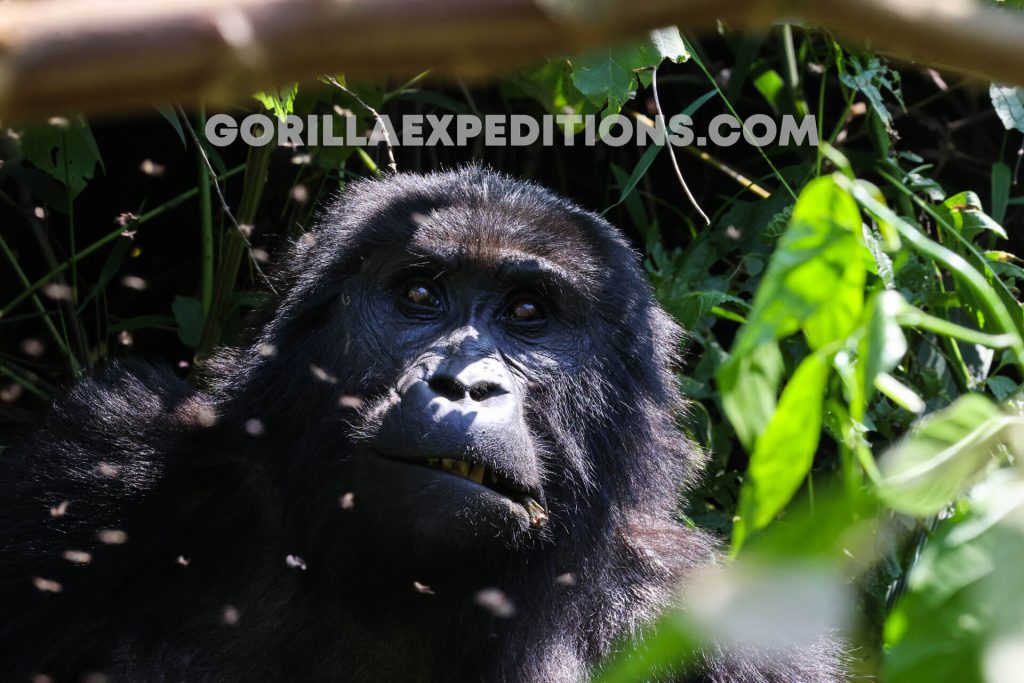
Within Virunga National Park, several well-documented gorilla families provide vivid examples of how these dynamics play out over time, each group telling a unique story shaped by leadership decisions, environmental pressures, and individual personalities.
The Bageni Gorilla Family stands out as one of the largest known groups, having grown rapidly after its founding silverback broke away from his original family, although its size has also made it more susceptible to internal tensions that occasionally lead to fragmentation. In contrast, the Kabirizi Gorilla Family has become known for its unusually high number of silverbacks, a situation that has led to intense rivalries and eventual splits, demonstrating how an abundance of leadership contenders can destabilize even a strong group.
The Rugendo Gorilla Family represents resilience in the face of tragedy, having endured significant losses due to poaching and regional conflict yet continuing to rebuild through births and the integration of new members, while the Mapuwa Gorilla Family illustrates the inevitability of change, as its leadership transitioned from an aging silverback to a younger rival, marking the beginning of a new chapter for the group.
Birth, Growth, and the Fragility of Life
The birth of an infant gorilla is a moment of profound importance within the family, as it represents both continuity and hope, yet it also introduces vulnerability because young gorillas require years of care and protection before they can become independent. Mothers devote immense attention to their infants, carrying them, feeding them, and teaching them how to navigate the complex social and physical environment of the forest.
Occasionally, rare events such as twin births occur, adding both excitement and challenge to the group, since raising two infants simultaneously demands additional resources and support from the family. Survival during these early stages is never guaranteed, as threats from illness, accidents, and social upheaval can affect even the most closely bonded groups.
Conservation, Habituation, and Human Connection
One of the most significant aspects of gorilla life in Virunga is the process of habituation, through which certain families gradually become accustomed to human observers, allowing researchers, conservationists, and carefully managed tourism to play a role in their protection. This process requires patience and respect, as it involves building trust without disrupting natural behavior, ultimately enabling close monitoring of health, population trends, and social dynamics.
The presence of humans, when managed responsibly, has contributed to one of the most encouraging conservation stories in modern history, as mountain gorilla populations have slowly increased after decades of decline, demonstrating that dedicated protection efforts can yield tangible results even in challenging environments.
Threats and the Ongoing Struggle for Survival
Despite these successes, gorilla families in Virunga National Park continue to face significant threats, including habitat loss caused by human expansion, the of poaching, and the of disease transmission from humans, all of which are compounded by regional instability that makes conservation work both difficult and dangerous. Rangers and conservation teams operate under constant pressure, risking their lives to ensure that these families can continue to exist in the wild.
Conclusion: A Living Tapestry of Relationships
Gorilla families in Virunga are not merely groups of animals coexisting in a shared space but are instead intricate social systems defined by leadership, cooperation, emotional depth, and adaptability, where each individual contributes to the survival and identity of the whole in ways that reflect a delicate balance between strength and vulnerability. Their lives, shaped by both harmony and conflict, offer a powerful reminder of the complexity of nature and the importance of preserving it, because within each family lies a story of endurance that continues to unfold in the forests of Central Africa.