

Golden Monkey Habituation in Mgahinga National Park: An Unforgettable Primate Adventure
Mgahinga Gorilla National Park in southwestern Uganda holds one of Africa’s most fascinating wildlife experiences: The Golden Monkey habituation. This encounter lets you spend extended hours with one of Central Africa’s rarest primates, observing them up close in their natural bamboo forests. Unlike a standard tracking walk, habituation immerses you deeper into the monkeys’ world, offering a rare window into their social lives, family bonds, feeding habits, and conservation challenges.
Where Golden Monkeys Live
Golden monkeys (Cercopithecus kandti) inhabit only the high-altitude forests of the Virunga volcanic mountains, spread across four protected parks in Uganda, Rwanda, and the Democratic Republic of Congo. In Uganda, Mgahinga is the only place where golden monkey habituation for tourists is offered.
These striking primates prefer thick groves of bamboo found on the slopes of ancient volcanoes rising above 2,000 meters. Bamboo provides not just food but also shelter, giving the monkeys fresh shoots, leaves, fruits, and space to forage and play.

What Makes Golden Monkeys Special
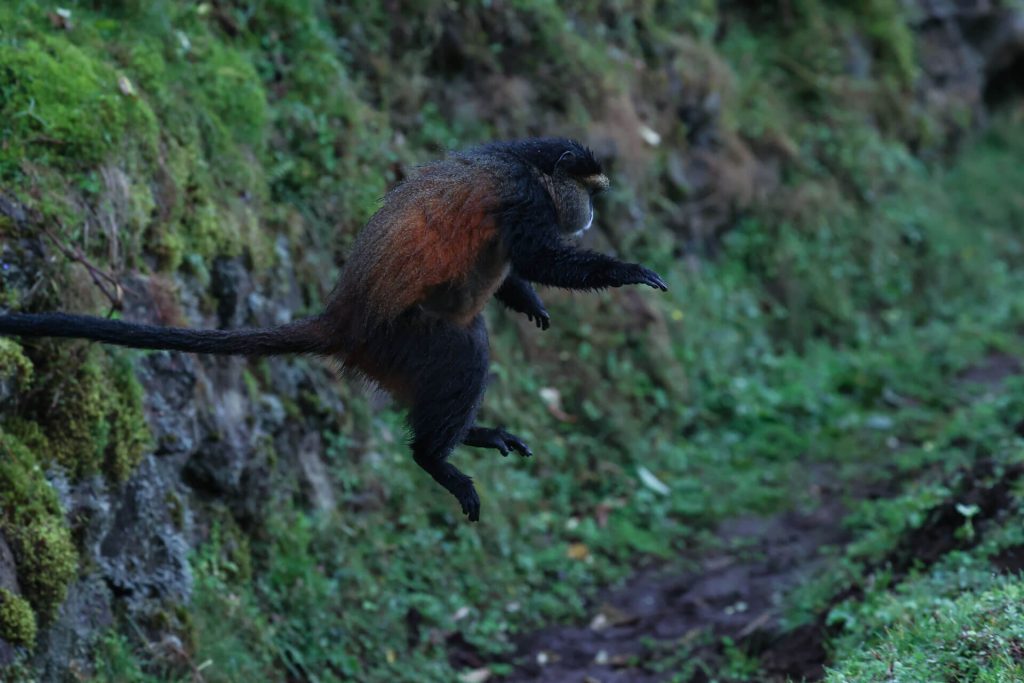
Golden monkeys stand out with their brilliant golden-orange fur set against darker limbs and faces. Their long tails help them balance as they leap through bamboo canopies. Males typically measure about 48–67 cm in body length, with females slightly smaller, and adults weigh between roughly 3.5–7 kg. These monkeys are agile, vocal, and extremely social, living in large family groups called troops that can reach up to 60 individuals, sometimes more.
These primates communicate through a mix of vocal sounds and facial expressions that help them stay connected while feeding, defending territory, or watching for danger. Their social world revolves around cooperation, hierarchy, and constant interaction among family members.
Understanding Habituation
In the wild, golden monkeys are cautious of humans. Habituation describes the process by which selected troops gradually become comfortable with human presence without altering their natural behaviors. This slow, careful process allows researchers and, eventually, visitors to observe the monkeys without causing them stress or fear.
Habituation doesn’t mean the monkeys become tame. Instead, they learn to ignore people as they go about their daily lives. The Uganda Wildlife Authority and conservation partners study the animals’ reactions, movement patterns, and social structures to ensure habituation happens in a way that protects both monkeys and humans.


The Habituation Experience
The Golden Monkey habituation experience typically runs around four hours, depending on where the troop is found for the day. Participants begin at the park headquarters in Mgahinga, receiving a briefing on safety, rules, and what to expect. After that, armed rangers and experienced guides lead visitors into the bamboo forests, following trails marked by broken bamboo shoots and other signs of monkey movement.
The hike often takes 1–3 hours through beautiful but challenging terrain — muddy paths, steep slopes, and dense vegetation. Once the habituated troop is located, visitors settle in to observe the monkeys closely. Over the course of several hours you will see them
Feed on shoots, leaves, fruits, and occasional insect
Leap expertly between bamboo branches
Communicate with unique chirps and call
Play with other group members
Watch mothers care for their infants
This extended observation time allows you to witness routine behaviors that are impossible to see during the shorter one-hour golden monkey tracking walk.
Behavior, Family & Social Structure
Golden monkeys live in structured social units. Each troop usually contains multiple adult females, their young, and one or more adult males. The dominant male, often called the alpha, leads the group by defending territory, coordinating movement, and mediating conflicts. Females bond closely with each other and their offspring, frequently helping each other raise young ones.
These primates breed year-round, and after a gestation period of around five months, females give birth to a single infant. Newborns come into the world with fur and open eyes. Mothers nurse their young and gradually introduce them to independent life over months. Most births occur every two years, as females invest significant time and energy in raising each baby.
Young males often leave their birth troop when they reach maturity to find or establish new troops, while females tend to stay closer to home, maintaining lifelong bonds with relatives.
What Makes Habituation Worthwhile
The habituation experience goes beyond tourism. Your presence contributes to vital conservation research that shapes how these animals are protected. During the habituation trek, guides and researchers share detailed insights into social behaviors, troop dynamics, and threats facing golden monkeys. You will learn how these primates adapt to changing conditions and how conservationists work to preserve their fragile world.
This experience also supports local communities and wildlife protection. Tourism revenue helps fund ranger patrols, research activities, and community projects that reduce pressure on forests and protect vital habitats.
Rules and Safety
Golden monkey habituation comes with strict guidelines designed to protect both visitors and primates. You must keep a safe distance, avoid direct contact, and minimize noise. Flash photography is prohibited, and silence helps prevent stress on the monkeys. If you feel ill, you should inform park staff before the experience — illness can transmit diseases to primates with devastating effects.
All participants must be at least 15 years old, and everyone must follow ranger instructions. Respect for the environment and the animals is essential at every stage of the habituation process.
Best Time to Participate
Golden monkey habituation runs year-round, but dry seasons offer the best conditions. The months of December–February and June–September provide easier walking trails, better visibility, and more comfortable weather for extended observation. Muddy trails in the wet seasons can slow progress and make the trek more challenging.
Conclusion
Golden monkey habituation in Mgahinga National Park offers an extraordinary blend of adventure, wildlife education, and conservation support. From the thrill of hiking through lush bamboo forests to the joy of watching lively troops interact just meters away, this experience connects you deeply with one of Africa’s most beautiful primates. It teaches respect for nature and provides lasting memories of discovery, wonder, and meaningful wildlife encounters.