

Gorilla Habituation Vs Normal Gorilla Trekking
Gorilla Habituation Vs Normal Gorilla Trekking, Few wildlife experiences can match the feeling of entering an ancient African rainforest and finding yourself quietly standing near a family of mountain gorillas. Their size may be intimidating, but their intelligence, social bonds, and surprisingly gentle behavior make the encounter unforgettable.
For travelers planning a gorilla safari in Uganda, however, there is an important choice to make: Should you choose normal gorilla trekking or the Gorilla Habituation Experience?
Although the two activities take place in the same remarkable environment and both involve observing mountain gorillas in their natural habitat, they are very different experiences. The biggest differences include the amount of time spent with the gorillas, group size, the gorillas’ level of habituation, cost, physical demands, and the overall character of the encounter.
This guide explains those differences so you can decide which experience best suits your interests, budget, and expectations.
What Is Normal Gorilla Trekking?
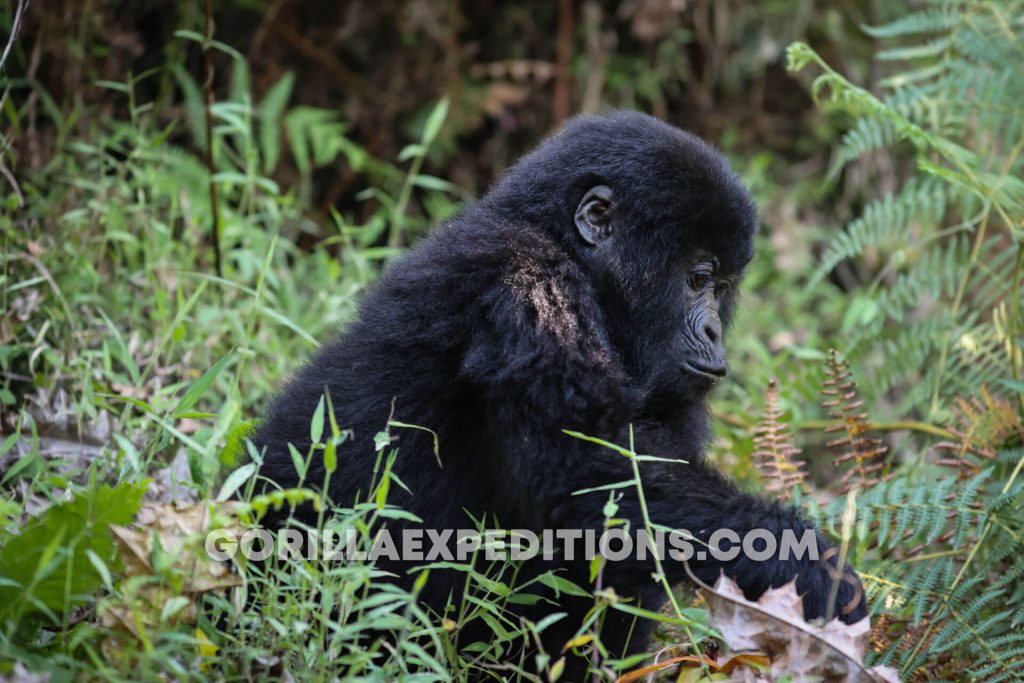
Normal gorilla trekking is the traditional way most visitors experience mountain gorillas in Uganda. It takes place in Bwindi Impenetrable National Park and Mgahinga Gorilla National Park, where visitors trek through the forest with trained guides and trackers in search of an assigned gorilla family.
Uganda Wildlife Authority explains that a typical gorilla trek can take approximately two to seven hours, depending on where the gorillas are located and how far the group must travel through the forest. Once the gorilla family is located, visitors are generally allowed one hour of observation.
Uganda Wildlife Authority
The gorilla families visited during standard trekking are already habituated. In simple terms, they have undergone a lengthy process of becoming accustomed to carefully controlled human presence. This means they are generally more comfortable around visitors and can continue feeding, resting, grooming, playing, and interacting with one another while people observe from an appropriate distance.
For many travelers, one hour sounds short. In reality, it can feel remarkably full. A gorilla may walk toward you, a youngster may begin playing nearby, or a silverback may suddenly appear through the vegetation. Because wildlife is unpredictable, every minute can bring something different.

What Is the Gorilla Habituation Experience?
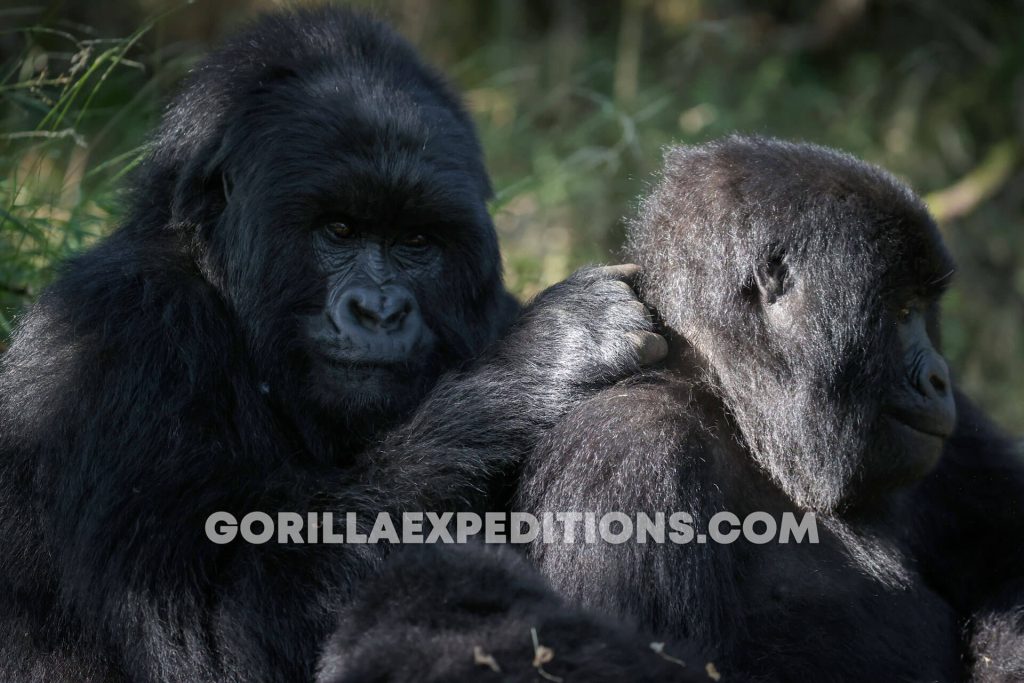
The Gorilla Habituation Experience is a more specialized activity available in Uganda. Instead of visiting a family that has already completed habituation, visitors accompany researchers and trackers while working with a gorilla family that is still becoming accustomed to human presence.
Uganda Wildlife Authority describes the experience as an opportunity for visitors to accompany researchers and habituators into the forest and participate in the process of habituating gorillas to human presence.
Uganda Wildlife Authority
The major attraction is the amount of time available. Participants can spend up to four hours with the gorilla group rather than the one hour permitted during standard trekking. The group is also much smaller, with a maximum of four visitors commonly associated with the habituation experience.
That additional time changes the nature of the experience completely.
You are not simply arriving, taking photographs, watching the gorillas for an hour, and leaving. Instead, you have more opportunity to observe how the family behaves throughout an extended period and to learn from the researchers and trackers involved in the habituation process.
The Biggest Difference: Four Hours vs One Hour
The most obvious difference between the two experiences is time.
With normal trekking, you receive approximately one hour of observation after locating the gorillas. With habituation, you can spend up to four hours with the group.
This does not mean that four hours guarantees four hours of close-up encounters. In fact, the opposite can sometimes be true.
Because the habituating gorillas are still becoming comfortable around humans, they may move away, keep their distance, disappear into thick vegetation, or behave less predictably. The longer time allows visitors to follow the natural rhythm of the encounter rather than expecting constant close viewing.
A standard trek, therefore, can sometimes provide a more concentrated wildlife encounter, while habituation offers a longer and potentially more unpredictable one.
Fully Habituated vs Semi-Habituated Gorillas
This distinction is essential.
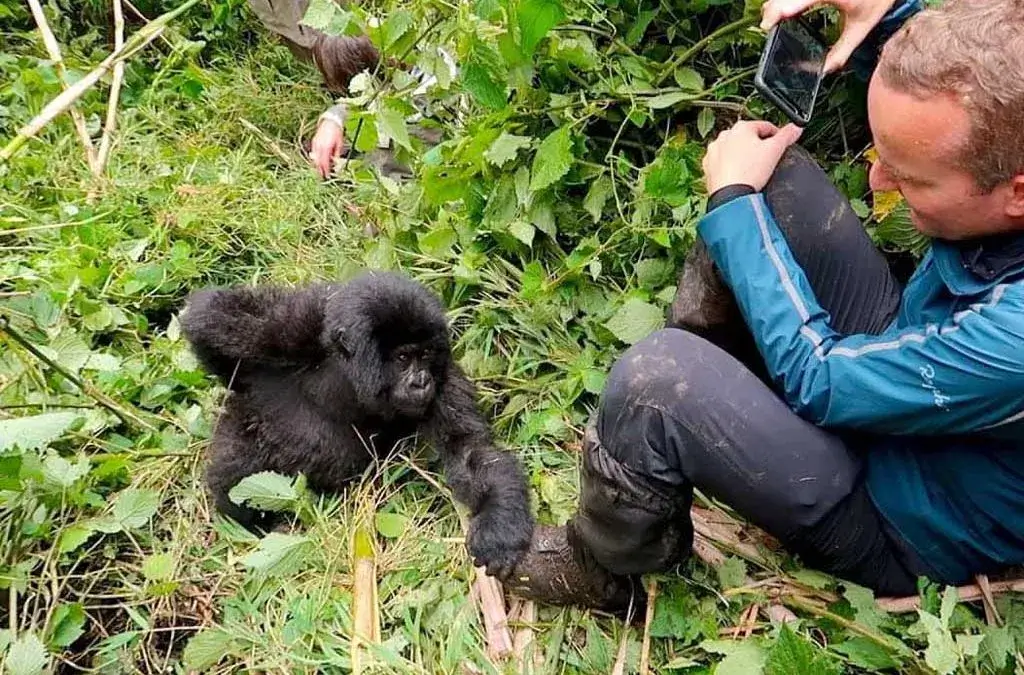
During a normal trek, you visit a fully habituated gorilla family. The animals have become accustomed to the presence of people under controlled conditions.
During the Gorilla Habituation Experience, you visit a family that is still undergoing habituation. Researchers and trackers are gradually helping the gorillas become comfortable with human presence.
The habituation process is not something that happens overnight. It requires repeated, carefully managed encounters over an extended period. The researchers must understand the personalities and reactions of individual gorillas while ensuring that human contact does not compromise their welfare.
Consequently, habituation is better understood as a conservation and research experience rather than simply a longer version of ordinary trekking.
Group Size: Another Major Difference
Group size can significantly influence a wildlife experience.
Normal gorilla trekking groups can include up to eight visitors assigned to a gorilla family. The Gorilla Habituation Experience is considerably smaller, generally allowing up to four visitors.
The smaller group creates a quieter and more intimate atmosphere. There are fewer people moving through the forest, fewer cameras competing for space, and fewer voices around the animals.
For photographers, wildlife enthusiasts, researchers, and travelers who value a more private experience, this can be a major advantage.
It is also important to remember that the smaller group does not mean visitors can approach the gorillas freely. The same principle applies throughout the experience: the animals’ welfare comes first, and visitors must follow instructions from the ranger and research teams.
Which Experience Is More Physically Demanding?
Both experiences require reasonable physical fitness.
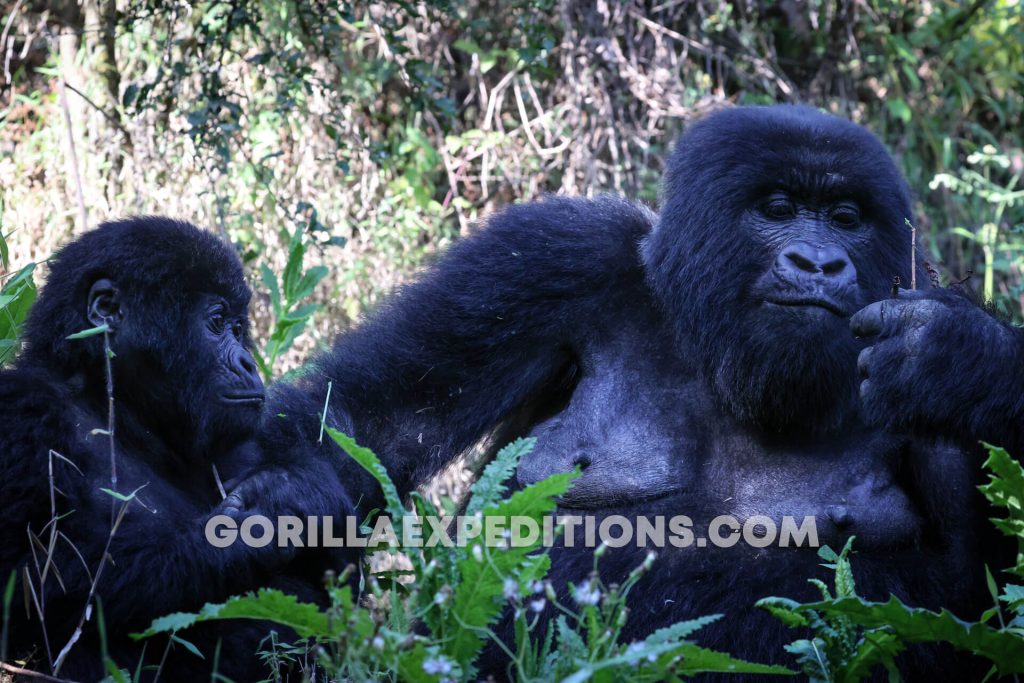
Bwindi is not a conventional safari landscape where you sit in a vehicle and wait for animals to appear. It is a dense, mountainous rainforest with steep slopes, thick vegetation, slippery ground, and changing weather.
Normal gorilla trekking can already be physically demanding because the duration of the hike depends on the location of the assigned family. Uganda Wildlife Authority recommends moderate fitness for gorilla tracking.
Uganda Wildlife Authority
Habituation can be even more demanding because the encounter lasts much longer. You may spend several hours moving through difficult forest terrain while following the research team and observing a group that does not necessarily remain in one convenient location.
Therefore, if you prefer a shorter and more straightforward wildlife experience, standard trekking may be the better choice.
Photography: Which One Is Better?
Photography is another area where the difference becomes obvious.
Normal trekking gives you a limited period in which to capture photographs. The gorillas may be nearby, but they can also move behind vegetation or change position quickly.
The habituation experience gives photographers substantially more time to observe behavior and wait for interesting moments. Instead of feeling pressured to take every photograph immediately, you have more opportunity to watch the family and anticipate what might happen next.
However, more time does not automatically mean better photographs. Dense rainforest, changing light, moving animals, vegetation, and the behavior of the gorillas can all make photography challenging.
The greatest photographic advantage of habituation is not simply the number of pictures you can take. It is the opportunity to observe behavior over a longer period.
Cost and Value
Price is another important consideration.
Current travel information places Uganda’s standard gorilla trekking permit at around USD 800 for foreign non-residents, while the Gorilla Habituation Experience is commonly listed at approximately USD 1,800. Because permit prices and tourism regulations can change, travelers should verify the current official tariff before booking.
At first glance, the habituation permit appears expensive. But the value comparison is not simply about paying more for additional hours.
The higher-priced experience provides a smaller group, considerably more time with the gorillas, and exposure to an ongoing conservation and research process. For someone whose primary reason for visiting Uganda is to understand mountain gorillas at a deeper level, that difference can justify the additional expense.
For travelers working with a tighter budget, however, standard trekking remains an extraordinary experience and offers an excellent opportunity to see habituated mountain gorillas in their natural habitat.
Which One Should You Choose?
Choose normal gorilla trekking if:
- This is your first gorilla safari.
- You want the classic gorilla experience.
- You have limited time in Uganda.
- You want to keep permit costs lower.
- You prefer a more predictable encounter with habituated gorillas.
- You are combining gorilla trekking with other activities such as chimpanzee tracking or a wider Uganda safari.
Choose the Gorilla Habituation Experience if:
- Gorillas are the main reason for your trip.
- You want substantially more time in the forest.
- You are fascinated by animal behavior and conservation.
- You enjoy photography and wildlife observation.
- You prefer smaller groups.
- You are comfortable with a less predictable encounter.
- You are prepared for a longer and potentially more physically demanding day.
- Gorilla Trekking vs Habituation: The Bottom Line
- The decision between gorilla trekking and gorilla habituation is not really about choosing between a “short” experience and a “long” one.
It is about choosing between two different ways of experiencing mountain gorillas.
Normal trekking gives you the opportunity to meet a fully habituated family during a carefully controlled one-hour encounter. It is accessible to a wider range of travelers and remains one of Africa’s most extraordinary wildlife experiences.
Gorilla habituation goes deeper into the process behind that encounter. You spend more time in the forest, join a much smaller group, and observe gorillas that are still becoming accustomed to human presence while researchers and trackers continue their work.
Ultimately, neither experience is universally better.
If you want an unforgettable first meeting with mountain gorillas, normal trekking is more than enough. If you are a serious wildlife enthusiast who wants to spend more time observing behavior and understanding the conservation process, the Gorilla Habituation Experience can be worth the additional cost, time, and physical effort.