

Why Kigali Is the Smarter Gateway for Uganda Gorilla Trekking
Uganda’s two gorilla parks Bwindi Impenetrable National Park and Mgahinga Gorilla National Park sit in the extreme southwest corner of the country, hard against the Rwandan and Congolese borders. Entebbe International Airport, Uganda’s main gateway, is on the opposite end of the country. A road transfer from Entebbe to Bwindi takes roughly 8 to 9 hours, sometimes split across two days.
Kigali International Airport (KGL), by contrast, is a short 4-to-5-hour drive from the border crossings at Cyanika or Katuna, and from there directly into Bwindi’s southern sectors (Rushaga and Nkuringo). For a Canadian traveler who has already spent 18-24 hours in transit across the Atlantic, that difference matters. It means less time on the road, one fewer overnight stop, and a same-day or next-day arrival at your lodge instead of a multi-day approach.
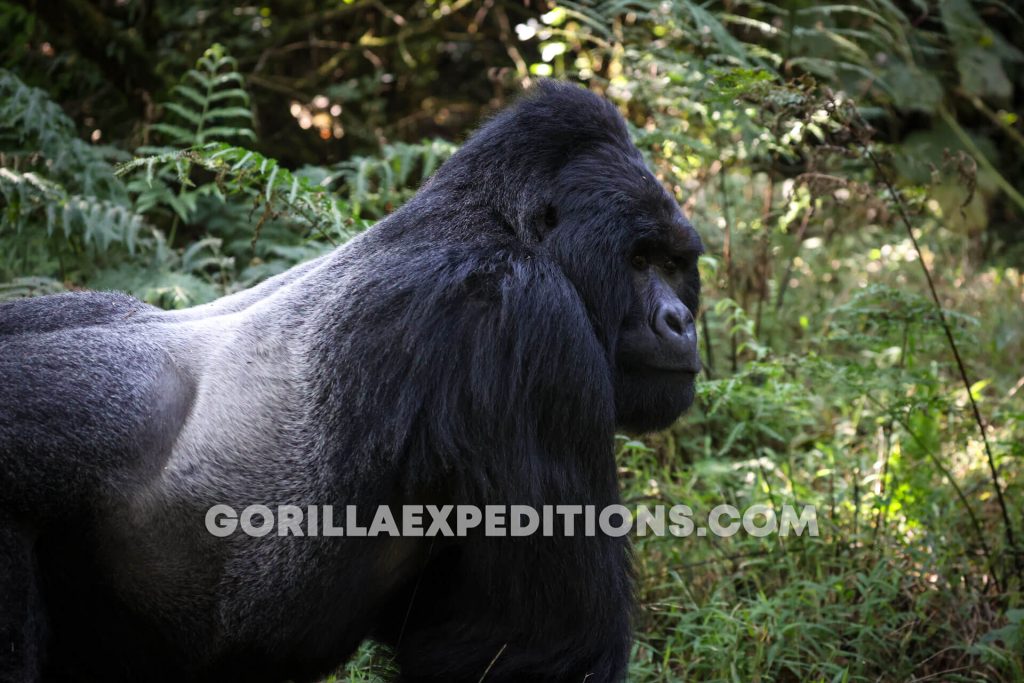
The trade-off is that Kigali is a Rwandan airport, so your itinerary becomes a two-country trip by default which, done well, is a feature rather than a complication. A short stop in Kigali also opens the door to visiting the Kigali Genocide Memorial or extending into Volcanoes National Park for a separate Rwanda-side gorilla trek, if your schedule allows.
Step 1: Booking Your Flight from Canada
There is no direct flight from Canada to East Africa, so every itinerary includes at least one layover. From Toronto, Montreal, or Vancouver, the most workable connections to Kigali run through Amsterdam (KLM), Brussels (Brussels Airlines), Doha (Qatar Airways), Istanbul (Turkish Airlines), or Addis Ababa (Ethiopian Airlines). Total travel time typically runs 18 to 24 hours depending on layover length and city of departure.
A few practical notes for booking:
Book 3-4 months out for gorilla trekking specifically, since your flight dates need to align with permit availability, not the other way around.
Qatar Airways and Ethiopian Airlines tend to offer the most competitive fares into Kigali from Canadian hubs, though this shifts seasonally.
Build in an arrival buffer. Landing in Kigali the day before your border transfer, rather than trying to fly and drive on the same day, dramatically reduces the risk of missing your trekking briefing due to flight delays.

Step 2: Visa Requirements for Canadians, What Actually Applies in 2026.
This is where a lot of published guides get outdated fast, so here’s where things actually stand:
Rwanda: Canadian citizens receive a free 30-day visa on arrival at Kigali International Airport no pre-approval, no e-visa application, and no fee. You’ll need a passport valid for at least six months beyond your arrival date and (per Rwandan immigration rules) supporting details such as your accommodation booking.
Uganda: Canadian citizens are not visa-exempt and need to apply for a Uganda e-Visa online before departure. It’s a single-entry visa valid for a 45-day stay, and approval typically comes back within a few business days but don’t leave it until the week of travel.
East Africa Tourist Visa: If your itinerary starts in Uganda or Kenya rather than Rwanda, the East Africa Tourist Visa lets you move between Uganda, Kenya, and Rwanda on one multiple-entry visa. The catch is that it must be applied for through whichever of the three countries you enter first so if Rwanda is your point of entry, this option doesn’t apply, since Rwanda’s own visa-on-arrival for Canadians is already free and simpler. For a Canada-via-Kigali-into-Uganda routing, most travelers find it faster to get the free Rwanda visa on arrival plus the separate Uganda e-Visa, rather than routing the East Africa visa through Rwanda.
Whichever way you go, confirm current requirements directly with Uganda’s e-Visa portal or Rwanda’s Directorate General of Immigration before booking, since East African visa policy has shifted more than once in recent years.

Step 3: What a Gorilla Permit Actually Costs in 2026
- This is the single largest line item after your flight, and the number has become genuinely confusing online because Uganda and Rwanda price it very differently.
- Uganda (Bwindi or Mgahinga), set by the Uganda Wildlife Authority:
- Foreign non-resident: $800 USD per person, standard season
- Foreign non-resident, low season (April, May, November): $600 USD but these discounted permits cannot be rescheduled once booked
- Foreign resident: $700 USD ($500 in low season)
- Rest-of-Africa passport holders: $500 USD
- East African Community citizens: roughly $80 USD (UGX 300,000)
Rwanda (Volcanoes National Park): $1,500 USD per person for foreign non-residents nearly double Uganda’s rate, which is one reason many Canadian travelers choose to trek in Uganda while simply transiting through Rwanda rather than trekking on both sides of the border.
One operational change worth knowing: as of 2026, individual travelers can no longer book Uganda gorilla permits directly through the Uganda Wildlife Authority. Bookings must now go through a licensed Ugandan tour operator. That’s not a sales pitch it’s a straightforward operational shift, and it means your operator’s UWA relationship and booking speed genuinely matters, not just their itinerary design.
Permits are non-transferable, and each gorilla family group is capped at eight visitors per day, which is why booking 3-6 months ahead for peak season (June-September, December-February) is standard advice, not marketing pressure.
Step 4: The Kigali-to-Bwindi Road Transfer
Once you land in Kigali, the drive to Bwindi runs through Rwanda’s Northern Province, crosses the border at Cyanika or Katuna, and continues into Uganda’s Kisoro or Kabale districts. Expect 4-5 hours of driving, through terraced hillsides, tea plantations, and small trading towns genuinely scenic, if occasionally slow where the road surface degrades.
Border crossings at Cyanika and Katuna are generally straightforward for tourist traffic, though allow extra time during midday, when commercial truck traffic backs up. A guided transfer with a licensed driver-guide who knows both sides of the border removes most of the friction here customs forms, vehicle permits, and the practical matter of which currency to have on hand (Rwandan francs and Ugandan shillings are both useful; USD is accepted in most tourist-facing transactions).
Step 5: Choosing Between Bwindi and Mgahinga
Bwindi Impenetrable National Park is the larger and more commonly trekked option, with four trekking sectors (Buhoma, Ruhija, Rushaga, Nkuringo) and roughly 20 habituated gorilla families spread across them. It suits first-time trekkers and anyone who wants sector flexibility or plans to combine gorilla trekking with a longer Uganda safari circuit.
Mgahinga Gorilla National Park is smaller, quieter, and sits at higher altitude in the Virunga volcanic range shared with Rwanda and DR Congo. It typically has only one habituated gorilla family available for trekking at a given time, along with golden monkey tracking as a secondary activity. It appeals to travelers who want a less-visited park and don’t mind the steeper volcanic terrain.
Given the Kigali routing, Mgahinga is often the geographically closer option — it borders Rwanda’s Volcanoes National Park directly while Bwindi’s Rushaga and Nkuringo sectors are only marginally further.
What the Trek Itself Involves
Trekking days begin early with a 7 a.m. ranger briefing at the park headquarters, where you’re assigned to a specific gorilla family based on fitness level and current tracker reports on that family’s location. The hike itself can run anywhere from one to six hours round trip, depending on where the gorillas were last spotted this is wild terrain, not a scheduled encounter.
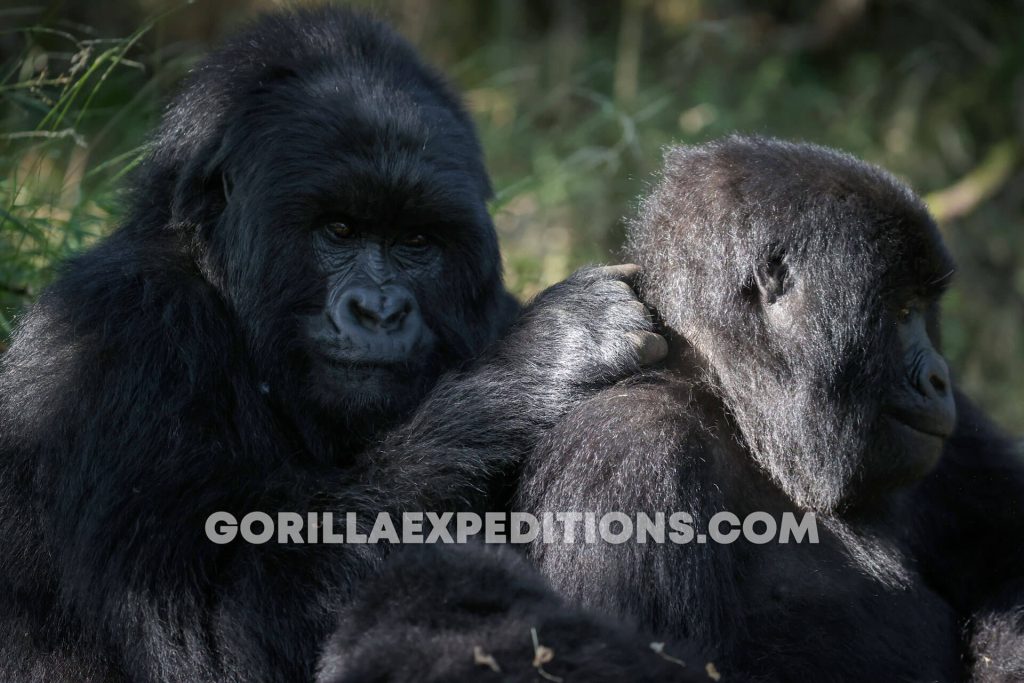
Once your group locates the family, you get one hour with them: watching feeding, grooming, and family interaction from a required minimum distance of 7 meters. Porters are available to hire locally and are worth the modest fee, both for the steep terrain and as direct income support for the surrounding community.
Physical preparation matters more than most travelers expect. Trails are muddy, steep, and often overgrown, even in dry season. Sturdy waterproof hiking boots, gardening-style gloves for grabbing vegetation, long trousers, and a rain jacket are non-negotiable, not optional extras.
Best Time to Go
Uganda’s dry seasons June to September and December to March offer firmer trails and easier trekking conditions, and they correspond to peak permit demand and standard-rate pricing. The wetter months of April, May, and November bring muddier trails but also the discounted $600 permit rate and noticeably fewer trekkers per group, which some travelers actually prefer for a more private encounter.
Combining Kigali with Your Uganda Trek
Because you’re already routing through Rwanda, it’s worth deciding upfront whether Kigali is purely a transit point or part of the itinerary itself. A half-day at the Kigali Genocide Memorial before continuing to the border adds meaningful context to the region without extending your trip by more than a few hours. Travelers with more time sometimes add a Volcanoes National Park gorilla trek in Rwanda as well, though at $1,500 per permit versus Uganda’s $800, most budget-conscious itineraries choose one side of the border for the trek itself and treat the other as a cultural stop.
Frequently Asked Questions
Is it cheaper to fly into Kigali or Entebbe for Uganda gorilla trekking?
Flights into Kigali and Entebbe are usually comparably priced from Canada. The savings from routing through Kigali come from a shorter road transfer (4-5 hours versus 8-9 hours from Entebbe), which can eliminate a full extra day of driving and an overnight stop.
Do Canadians need a visa for both Rwanda and Uganda?
Yes, but the requirements differ. Rwanda issues Canadians a free 30-day visa on arrival. Uganda requires a paid e-Visa applied for online before departure.
How much does a Uganda gorilla permit cost for Canadians in 2026?
$800 USD per person in standard season, or $600 USD during the low-season months of April, May, and November. Rwanda’s equivalent permit costs $1,500 USD.
Can I book a Uganda gorilla permit myself, or do I need a tour operator?
Since March 2026, individual travelers can no longer book directly through the Uganda Wildlife Authority. Permits must be secured through a licensed Ugandan tour operator.
How long is the drive from Kigali to Bwindi Impenetrable National Park?
Approximately 4-5 hours, crossing the border at Cyanika or Katuna.